

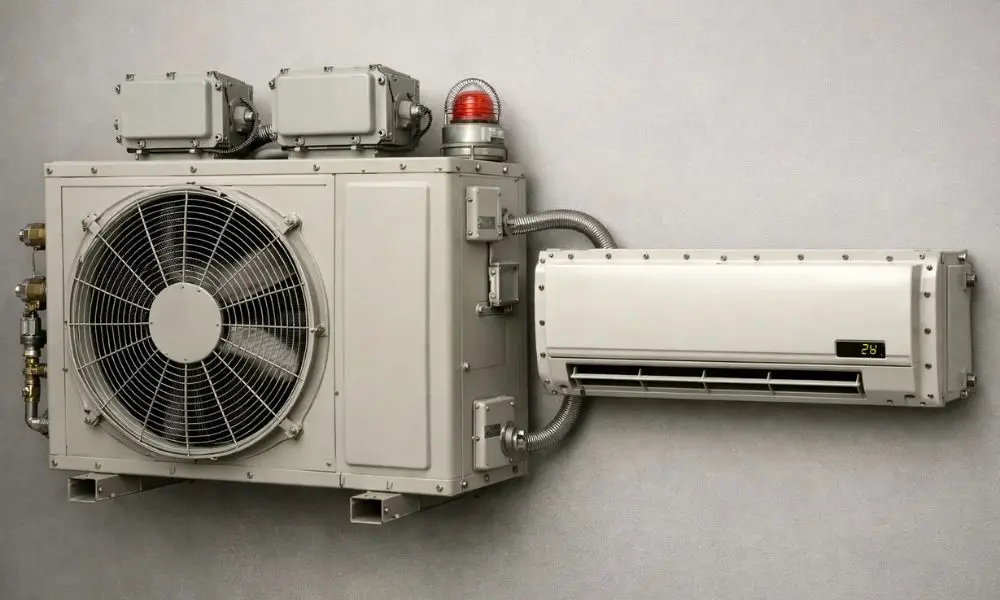

Not every air conditioner was created equal as far as cooling technology is concerned. Explosion proof air conditioner uae solutions are always needed in specialized industrial environments where comfort is less significant than safety. They are fitted with units, which are to operate in areas where flammable gases, dust, or vapours may occur and provide good control of temperatures and avoid hazardous events. Here in the blog, we are going to describe the main distinction between explosion-proof and regular air conditioners in an easy-to-understand manner, and this way, you will see how important the selection of the type is to a particular application.
What is a Regular Air Conditioner?
The common type of air conditioner is known as a regular one. These are residential, office, and commercial building units that cool or heat indoor air. They are beneficial in keeping the temperatures comfortable, and this is done through a refrigeration cycle that removes heat from the indoor air and releases it to the outside environment.
Conventional air conditioners are aimed at comfort, energy saving, and convenience. They are available in numerous styles such as split units, window units, portable ACs, and central systems, which are befitting the daily life and working conditions. They are, however, not constructed to work in hazardous conditions in which explosive atmospheres may be present.
What is an Explosion-Proof Air Conditioner?
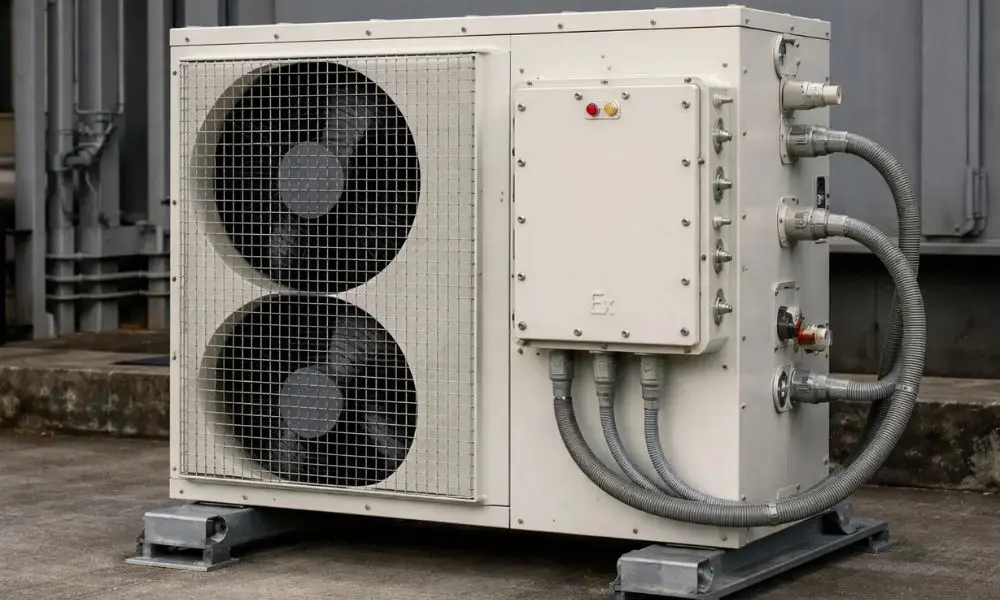
An explosion-proof air conditioner is a specially designed cooling system that is intended to be used in an area that is prone to explosion because of the presence of flammable gases, vapours, or dust. Although it serves the same fundamental purpose, which is to cool and, in some cases, heat air, the manner in which it was constructed and certified makes it larger than the ordinary units.
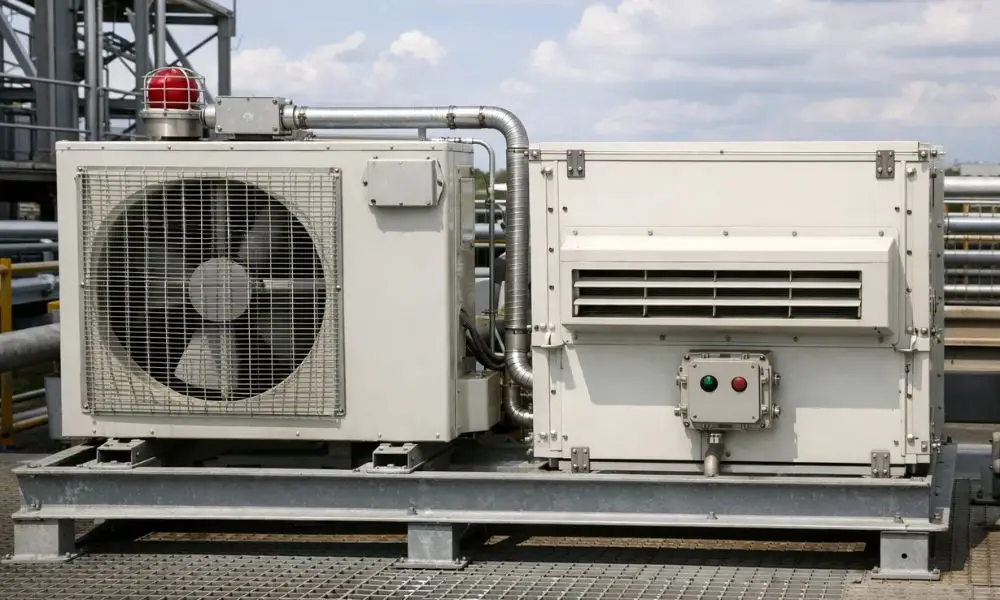
Explosion-proof ACs are applied in oil and gas, petrochemical plants, chemical processing plants, pharmaceutical factories, and other facilities that are rated as possibly explosive environments.
Key Differences Between Explosion-Proof and Regular Air Conditioners
The following are the key variations between these two categories of air conditioners:
1. Design Purpose
- Regular Air Conditioners: Custom-made to address general conditions with no explosive threats, such as home, school, office, and store locations.
- Explosion-Proof Air Conditioners: These are designed to work in flammable areas where flammable materials are likely to exist. They stop the external atmosphere from being ignited by the internal electrical parts of sparks or heat.
2. Safety Features
Air conditioners that are explosion-proof possess specialized safety features:
- Sealed Electrical Components: Internal electrical components are housed in strong enclosures to prevent sparks or heat from escaping.
- Reinforced Housing: This is constructed using reinforced steel or treated aluminum that can withstand the adverse industrial conditions.
- ATEX/IECEx Certifications: A large number of the explosion-proof units (including explosion-proof air conditioner UAE models) comply with strict international standards in the field of hazardous area operation.
These safety measures are usually not found even in regular air conditioners because they are not designed to operate in dangerous conditions.
3. Application Areas
- Regular ACs: Suited for homes and other commercial environments where the safety concerns of explosion risks do not exist.
- Explosion Proof ACs: These are designed to be used in industries that are exposed to inflammable gases or dusts, such as areas where using normal equipment would be a major threat.
4. Construction & Materials
Explosion-proof units have the external casing, internal circuits, and electrical connections made spark-proof and flame-resistant. Normal ACs are not as strong as this but are sturdier (and protection is not extended to this extent).
5. Cost and Maintenance
Explosion-proof air conditioners are also normally costlier than the normal air conditioners due to the high standards of safety they have to comply with and their rugged materials. The specialized maintenance is also necessary in these units to maintain the safety and compliance.
6. Certification and Compliance
ACs that are explosion-proof are highly certified (such as ATEX and IECEx) to ensure that they can be safely used in unsafe locations. Normal operation safety standards (electric shock, performance, energy efficiency) are certified in regular air conditioners, but not in explosive atmospheres.
Why Choose Explosion-Proof Units?
The safety should be of paramount importance in ironing out explosive atmospheres environments that cannot be discounted. With explosion-proof air conditioner UAE products, you can rest assured that your facility does not run the risk of ignition and fire accidents, and is still cool and in line with the requirements of the day.
Prolux International LLC is an explosion-proof, Electricals and LED lighting, and Solar integration company that is a leading supplier of solutions. They are a credible partner to businesses that work in harsh industrial conditions due to their knowledge of the hazardous area HVAC systems.
Conclusion
The distinction between explosion-proof and non-explosion-proof air conditioners is a key factor to have in mind when choosing the appropriate cooling system for your room. Whereas ordinary ACs are suitable and can be used in daily residential and business environments, explosion-proof air conditioners are necessary in industrial environments where there is a high possibility of fire or explosion. Ensuring peace of mind and operational efficiency, safety, compliance, and performance rank high in the list of priorities.
In the oil and gas industry, or any other chemical plant or manufacturing unit, designing a facility, the type of air conditioning to have installed can be the difference between success and failure.
Frequently asked questions (FAQs)
Q1. Can a regular air conditioner be used in hazardous areas?
No. Standard air conditioners do not have sparks and ignition blockage in explosive atmospheres and are unsuitable for working in hazardous areas.
Q2. What certifications should explosion-proof ACs have?
Seek certifications like the ATEX and IECEx, which are signs of adherence to the international safety standards of hazardous working environments.
Q3. Do explosion-proof air conditioners cost more?
Yes. They are also more expensive than ordinary air conditioners because of their rough construction, safety measures, and certification.
Q4. Where is explosion-proof ACs commonly used?
They are deployed in the oil and gas, petrochemical plants, chemical processing, pharmaceutical production, and other facilities where there is the risk of explosions.
Q5. Are explosion-proof air conditioners less efficient at cooling?
No. The explosion-proof units have the same cooling effectiveness as the standard air conditioners, but they are safe in hazardous areas.