

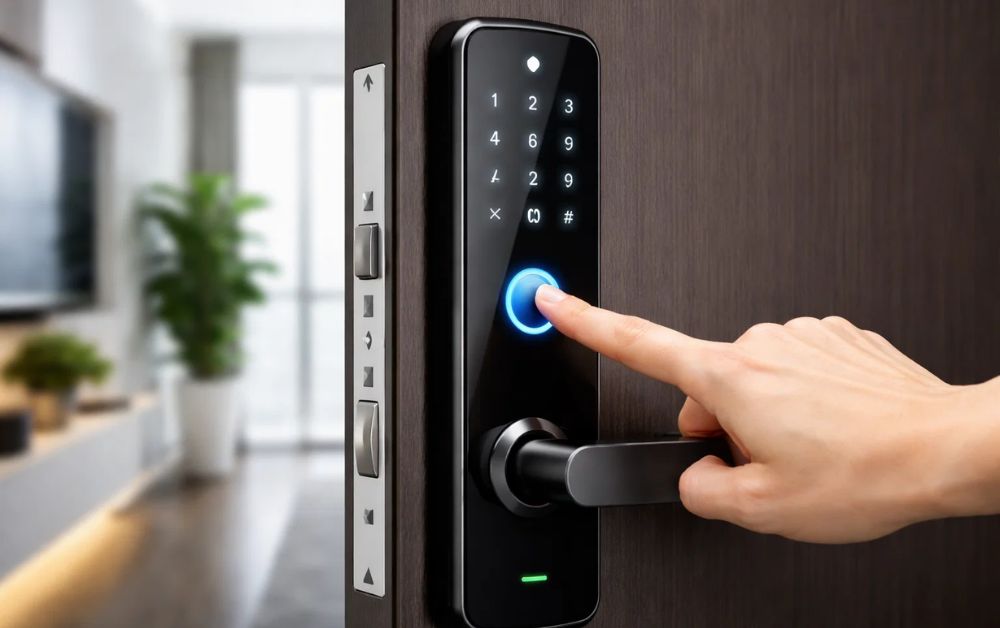

Security solutions in the modern era of the fast-changing world are not a mere mechanical system. Advanced access control technologies are becoming more popular as homes, offices, and industrial facilities require greater security and convenience. An example of such innovations is the fingerprint door locks, which are transforming the way individuals lock their doors. Fingerprint-based systems are a more innovative and safer alternative to conventional watertight keys that are based on physical keys. This blog details the difference between the use of fingerprint door locks and traditional locks, their features, advantages, and actual use.
Understanding Traditional Door Locks
The standard door locks are centuries old and are mechanical in nature. The ones they use are usually a key that fits into the internal pins or tumblers to make the lock rotate, and the door open. The reason why these locks are very popular is due to their affordability, ease of operation, and the fact that they do not need electricity or digital systems.
Nevertheless, there are obvious limitations to the traditional locks. When keys are lost, stolen, or duplicated, the owner is not even aware of it. Also, controlling access is a challenge in a system where many users require it because it usually involves issuing and sharing several keys.
What Are Fingerprint Door Locks?
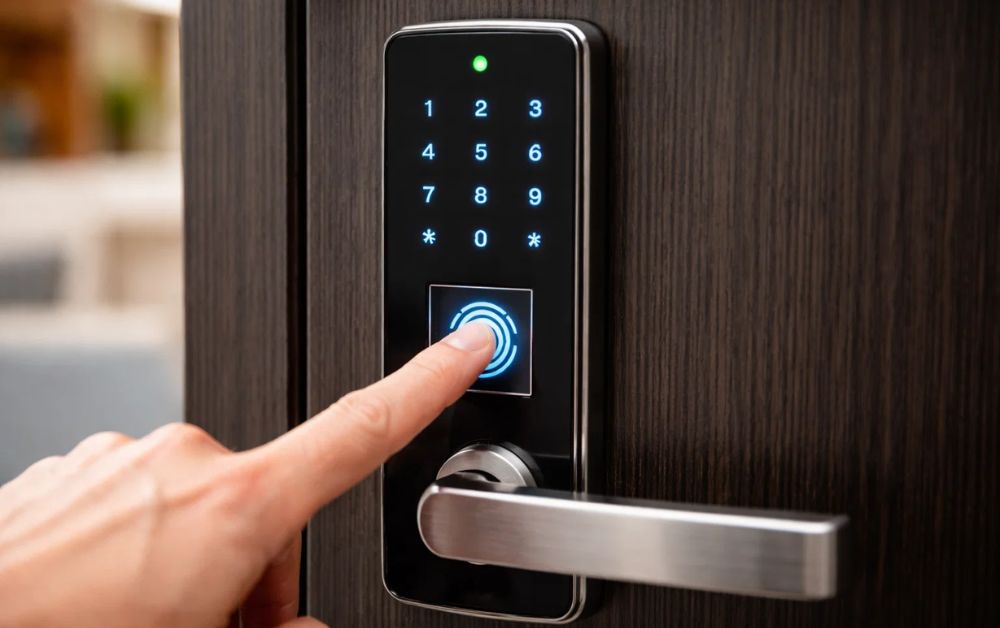
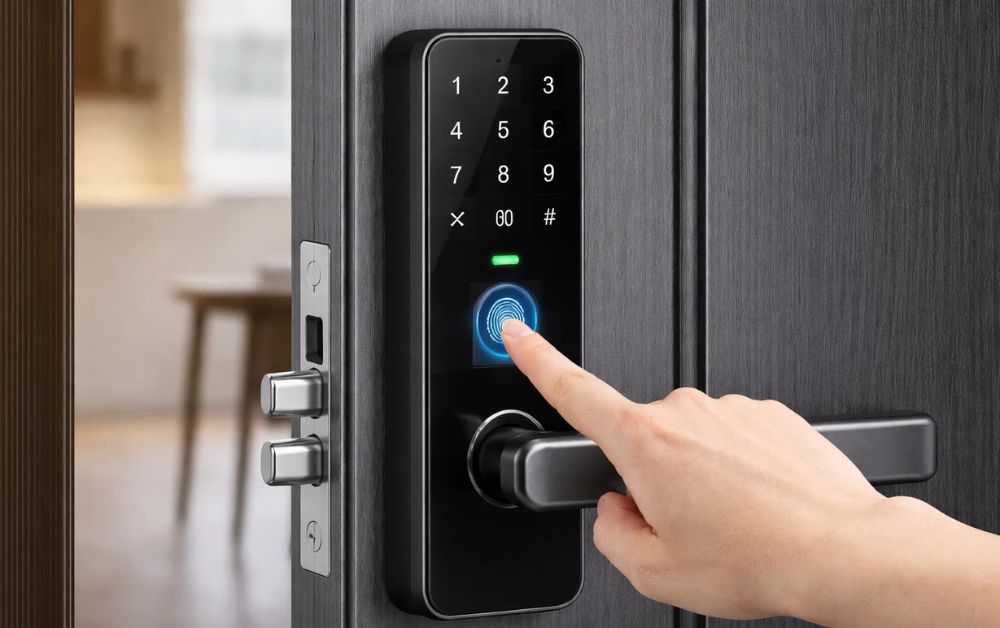
Biometric security devices, such as fingerprint door locks, require an individual to have a distinct fingerprint in order to gain entry. The user no longer needs to insert a key but puts a finger on a sensor. The system identifies the fingerprint and compares it to the stored information, and opens the door in case the fingerprint is approved.
Since the fingerprints are distinct for everyone, this technology provides more identity verification. Several fingerprint locks are also integrated with digital systems and biometrics, which makes it the best fingerprint locks in modern residential, commercial, and industrial environments.
Key Differences Between Fingerprint and Traditional Locks
1. Level of Security
The most crucial difference is security.
Conventional locks solely rely on keys. In case of a lost or copied key, unauthorized access can be gained without the knowledge of the owner. Experienced intruders can also crack the mechanical locks with the help of tools or lock-picking.
On the contrary, Fingerprint door locks use biometric data that cannot be copied and distributed easily. The fact that access is directly related to a registered fingerprint means that the probability of unwarranted access is diminished to a large degree. This renders fingerprint locks particularly helpful in territories where security is paramount.
2. Convenience and Ease of Access
In the traditional locks, the user is required to carry keys around all the time. Losing keys can be very inconvenient and stressful, leading to the replacement of locks or emergent solutions.
Fingerprint locks are a way of eradicating this problem. The users need to touch the door with their fingerprint, and it opens in a short time and without any difficulty. This comes in handy, especially in busy homes, workplaces, or plants where individuals move in and out of the premises during the day.
3. Access Management
Access control using conventional locks may take time. The addition of a user typically involves key cutting, and the removal of access may involve complete replacement of the lock.
Fingerprint locks make access control easier. Users may be added and removed from the system without any alteration of hardware. This is the best to use in offices, rentals, or industrial applications, where the needs of access vary on a regular basis.
4. Technology and Integration
The traditional locks are autonomous and do not integrate with the other systems. They have no tracking, monitoring, or integration with modern security solutions.
Fingerprint door locks can be easily incorporated into wider security or automation solutions. Digital capabilities, including activity logs, alerts, or connectivity with access control infrastructure, are supported by many models. This has rendered them appropriate for smart buildings and sophisticated facility management systems.
5. Maintenance and Reliability
Mechanical locks are usually more dependable and do not need much maintenance, but they may wear out after usage.
Fingerprint locks are based on the use of electronic parts and power sources, including batteries or wired. Although they might need a battery replacement or even sensor cleaning frequently, they are made to be rugged and reliable if they are serviced well.
Cost Considerations
The conventional locks tend to be cheaper initially and thus appealing to less security-sensitive requirements. Nevertheless, the expenses may be raised with time depending on the key replacement, lock replacement, or security upgrade.
The advanced technology of fingerprint locks is usually costly to operate at the beginning. This has, however, been overridden by their long-term value, especially in setups where security, convenience, and control of access are a priority.
Role of Prolux International LLC in Modern Solutions
With the changing technology in security, it is essential to have a trustworthy customer-supplier relationship. Prolux International LLC is a company known to be a distributor of explosion-proof solutions, electrical products, LED lighting, and solar integration. Prolux International LLC is a firm with a high level of innovation and quality to support the current-day infrastructure requirements in industrial, commercial, and specialized settings.
Their experience in the highly advanced electrical and other integrated systems also augers well with the increasing requirement of innovative and secure access solutions; hence, they are a reliable company in progressive projects.
Conclusion
The contrast between the old locks and door locks with fingerprint is much deeper than between keys and biometrics. Fingerprint locks are more secure, convenient, have flexibility in access control, and are compatible with the current systems. Although conventional locks still have a role to play in simple needs, biometric solutions are more appropriate in the current security demands.
As the suppliers of technology, such as Prolux International LLC, are promoting more advanced electrical and integrated packages, the use of fingerprint-based door locks will be a viable move toward more secure, intelligent, and efficient security packages in the future.

