


Introduction
Every hazardous area electrical installation relies on a network of connections, splices, and cable terminations, and each of these points represents a potential ignition source if flammable gases or dust are present. This is precisely the role that an explosion proof junction box is designed to address. This blog explains what these enclosures do, how they are constructed, and why getting this seemingly small component right is such an important part of hazardous area electrical design.

What Is an Explosion Proof Junction Box?
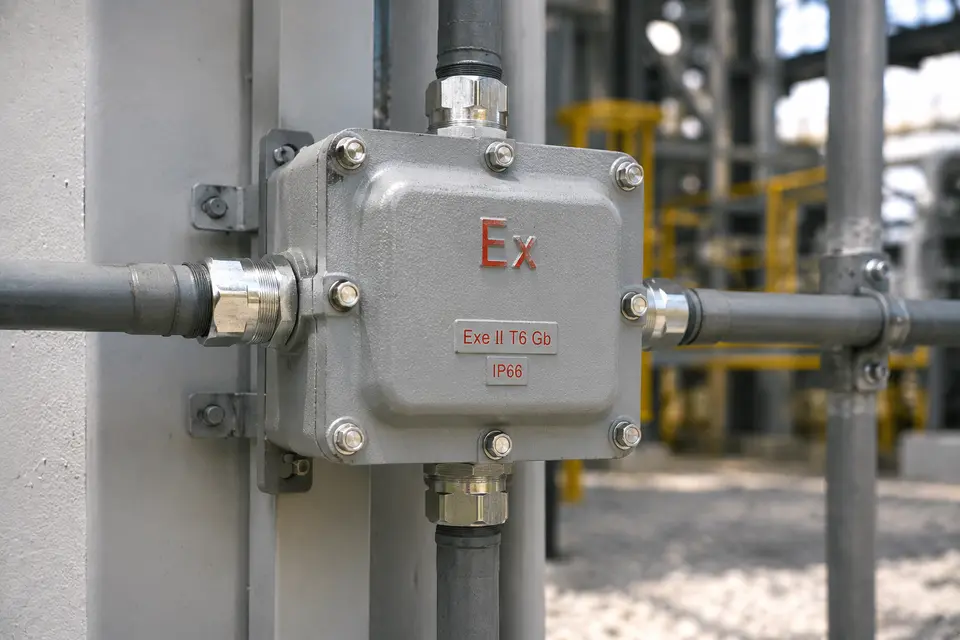
An explosion proof junction box is a sealed enclosure used to safely house electrical connections, cable splices, and terminations in areas where flammable gases, vapours, or combustible dust may be present. Unlike a standard junction box, which simply protects wiring from dust and moisture, an explosion proof version is engineered to contain any internal ignition and prevent it from reaching the surrounding atmosphere.
How the Enclosure Contains an Explosion
The core safety principle behind an explosion proof junction box is containment rather than prevention. If a spark inside the box ignites a flammable atmosphere that has entered the enclosure, the box is designed to withstand the resulting internal pressure and to cool any escaping gases below their ignition temperature before they reach the outside air. This is achieved through thick, precisely machined enclosure walls and tightly tolerance joints known as flamepaths.
Materials and Construction Quality
Explosion proof junction boxes are typically manufactured from cast aluminium, cast iron, or stainless steel, chosen for their strength and resistance to corrosion. The quality of the machining at the joints between the box body and its cover is critical — even small deviations from the certified tolerances can compromise the flamepath and allow hot gases to escape before they cool sufficiently.
Certification and Zone Matching
Like all explosion proof equipment, junction boxes must carry ATEX or IECEx certification appropriate to the zone classification, gas group, and temperature class of the installation area. An explosion proof junction box certified for one zone classification should never be substituted into an area with a more stringent classification, regardless of how similar the products might appear.
Sizing and Configuration Options
Explosion proof junction boxes come in a range of sizes and configurations, from small single-entry units to larger multi-way boxes capable of housing several terminal blocks. Choosing the correct size matters just as much as choosing the correct certification, since an overcrowded enclosure makes maintenance difficult and can create unintended stress on cable glands and internal wiring over time.
Common Applications in UAE Industry
Explosion proof junction boxes are used extensively across the UAE’s oil and gas, petrochemical, and chemical processing sectors, wherever cable connections, splices, or terminations need to be made within a hazardous area. They are commonly found alongside explosion proof lighting, motors, and control panels as part of a complete hazardous area electrical installation.
Installation Considerations for Electricians
Installing an explosion proof junction box correctly requires more than simply mounting it in place. Electricians working in hazardous areas need to use certified cable glands and conduit fittings that maintain the integrity of the flamepath, and any modification, drilling, or unauthorized alteration to the enclosure can void its certification entirely. Facilities should ensure that only electricians experienced in hazardous area work carry out these installations, and that any maintenance work is documented to preserve a clear compliance record for future inspections.
Why Quality Matters More Than Price
Because a junction box sits at a connection point rather than housing a major piece of equipment, it can be tempting to treat it as a minor line item in a project budget. However, a poorly manufactured or improperly certified junction box creates exactly the same ignition risk as any other piece of hazardous area equipment. Specifying genuinely certified products from a reputable manufacturer is essential, regardless of how small the component may seem.

Conclusion
Explosion proof junction boxes may be a small part of a hazardous area electrical installation, but their role in containing potential ignition sources makes them just as important as any other certified component. Facilities across the UAE’s industrial sectors should ensure every junction box in a hazardous area installation carries verified certification matched to the correct zone classification, and work with suppliers who understand the technical requirements involved in getting this right, since a single overlooked connection point can undermine the safety of an otherwise well-designed hazardous area installation.


