

Introduction
Energy efficiency is one of the most talked-about topics in modern infrastructure, commercial development, and industrial operations. As electricity costs rise and sustainability commitments become increasingly important for businesses and governments alike, the choice of lighting technology has become a genuinely significant operational and financial decision. LED lighting has emerged as the clear leader in energy-efficient illumination across virtually every application — from street lighting and commercial interiors to industrial facilities and specialist installations. For businesses in the UAE looking for reliable led light suppliers in uae, understanding why LED technology is so much more efficient than its alternatives help make the case for the investment confidently. This blog explains the technology behind LED efficiency and the real-world benefits it delivers.
How Traditional Lighting Wasted Energy
To understand why LED lights are so energy efficient, it helps to understand how their predecessor’s wasted energy. Incandescent bulbs operate by heating a tungsten filament until it glows — a process that converts only about 5% to 10% of the electrical energy consumed into visible light. The remaining 90% to 95% is converted into heat, which is essentially wasted energy from the perspective of illumination. Fluorescent tubes do better — converting perhaps 20% to 30% of consumed electricity into light — but still waste a significant portion as heat and require mercury-containing components that create disposal challenges.
The LED Difference: Electroluminescence
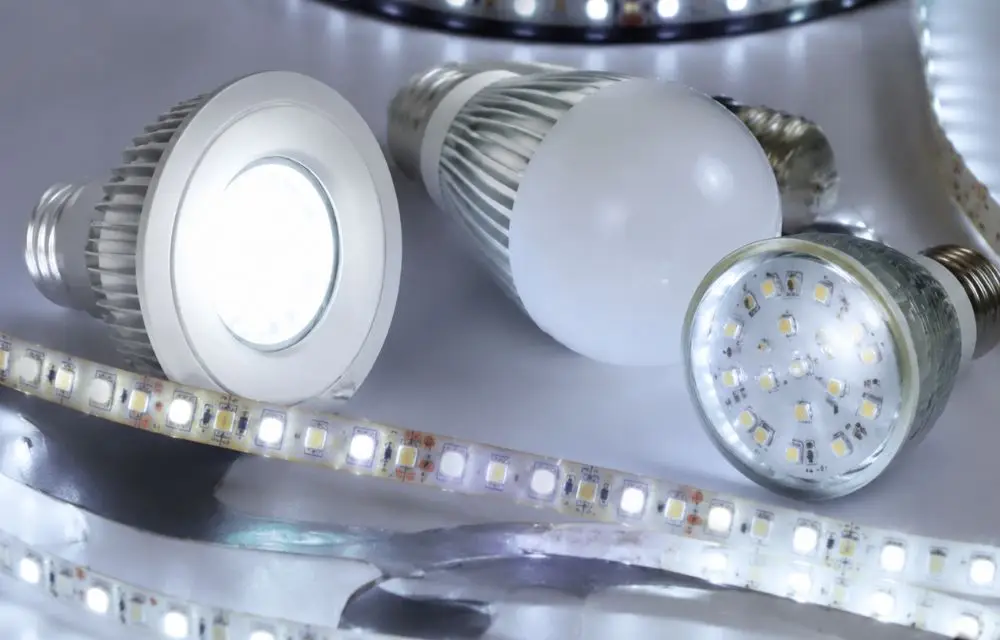
LED stands for Light Emitting Diode. Unlike incandescent or fluorescent technologies, LEDs produce light through electroluminescence — a process where electrons passing through a semiconductor material release photons (particles of light) directly, rather than producing heat that then generates light as a byproduct. This fundamental difference in the physics of light production is what makes LEDs dramatically more efficient.
A high-quality LED can convert 40% to 60% or more of the electrical energy it consumes into visible light — compared to 5% to 10% for incandescent technology. In practical terms, this means an LED producing the same amount of visible light as an incandescent bulb uses roughly 80% to 90% less electricity. Compared to fluorescent lighting, LEDs typically use 30% to 60% less energy for equivalent light output.
Lumens Per Watt: The Key Efficiency Metric
The standard measure of lighting efficiency is lumens per watt (lm/W) — a measure of how much visible light output is produced per watt of electricity consumed. Standard incandescent bulbs produce around 10 to 15 lumens per watt. Compact fluorescent lamps achieve approximately 40 to 70 lumens per watt. High-quality LED luminaires now routinely achieve 100 to 180 lumens per watt, with the most advanced products achieving even higher values.
For facilities with large numbers of luminaires — office buildings, warehouses, factories, car parks, and street lighting — this improvement in lumens per watt translates directly into dramatically lower electricity bills for equivalent or better illumination levels.
Long Lifespan Adds to Efficiency
Energy efficiency is not only about how much electricity a light source uses — it is also about how long it lasts before it needs replacement. High-quality LED luminaires are rated for operational lifespans of 50,000 hours or more — compared to approximately 1,000 hours for incandescent bulbs and 8,000 to 15,000 hours for fluorescent lamps. This dramatically longer lifespan reduces maintenance and replacement costs significantly, which is particularly valuable in commercial and industrial installations where lamp replacement requires labour and sometimes scaffold or aerial access.
No Warm-Up Time, Instant Full Output
Unlike metal halide and fluorescent lamps that require a warm-up period to reach full output, LED lights operate at full intensity immediately from switch-on. For applications where lights are frequently switched on and off — such as motion-sensor controlled areas, retail dressing rooms, and warehouses with intermittent occupancy — this instant-on capability means the full energy saving benefit is available every time the light is used, without the inefficiency of leaving lights on to avoid the relight delay that other technologies suffer.
Directional Light Reduces Waste
LED lights emit light directionally — in a specific direction — rather than omnidirectionally like traditional bulb-based technologies. Omnidirectional sources require reflectors, diffusers, and light distribution fixtures that inevitably absorb and waste some proportion of the light before it reaches the target surface. LEDs can be designed to project light precisely where it is needed, which reduces the total amount of light that needs to be generated to achieve the required illumination level at the point of use.
Temperature and Environmental Benefits
Because LEDs convert so much less electrical energy into heat compared to traditional technologies, they run significantly cooler. In air-conditioned environments, this means the air conditioning system has less waste heat to remove, contributing a secondary energy saving on top of the direct electricity saving from the lighting itself. This is particularly relevant in the UAE’s climate, where air conditioning represents a major proportion of total building energy consumption.
Conclusion
LED lights are energy efficient because of the fundamental physics of electroluminescence — producing light directly from electricity rather than via heat as an intermediary. The result is dramatically higher lumens per watt performance, longer operational life, instant-on capability, directional light output, and lower heat generation. For businesses across the UAE working with professional led light suppliers in uae, upgrading to quality LED technology represents one of the most cost-effective and straightforward energy efficiency investments available, delivering measurable savings across every type of commercial, industrial, and infrastructure lighting application.