

Introduction
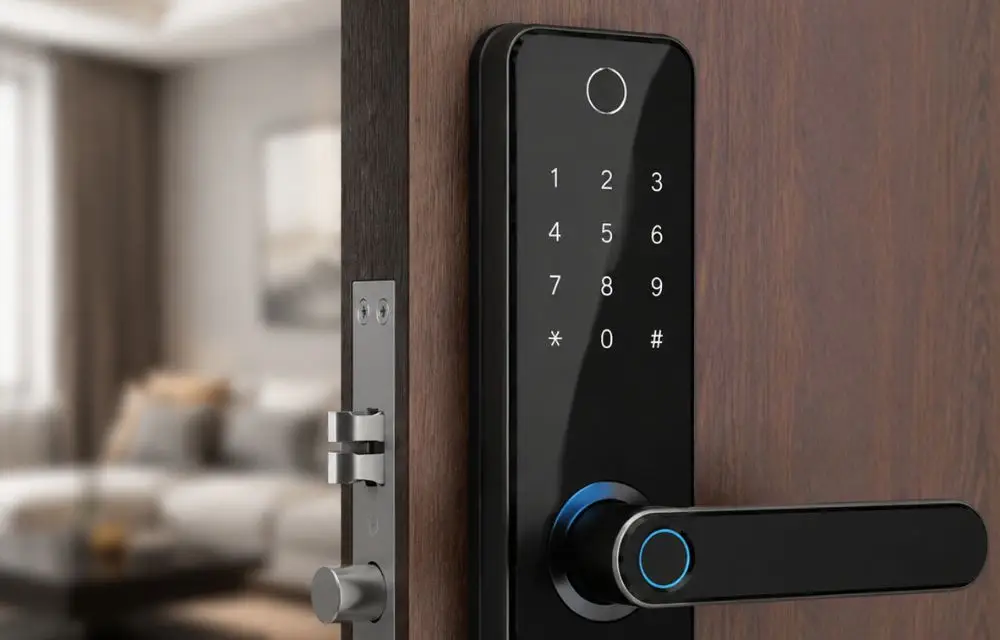
Home and business security has changed dramatically over the past decade, and one of the most significant changes has been the evolution of door locking technology. The traditional mechanical lock and key, while still widely used, is increasingly being supplemented or replaced by smart door lock systems that offer enhanced security, greater convenience, and advanced management capabilities that mechanical locks cannot provide. A smart door lock is an electronically operated locking device that can be controlled using a smartphone, keypad, fingerprint reader, proximity card, or remote management system — and in many cases, a combination of these methods. Understanding the different types of smart door locks available helps homeowners, businesses, and facility managers choose the right solution for their specific security requirements.
Keypad Smart Locks
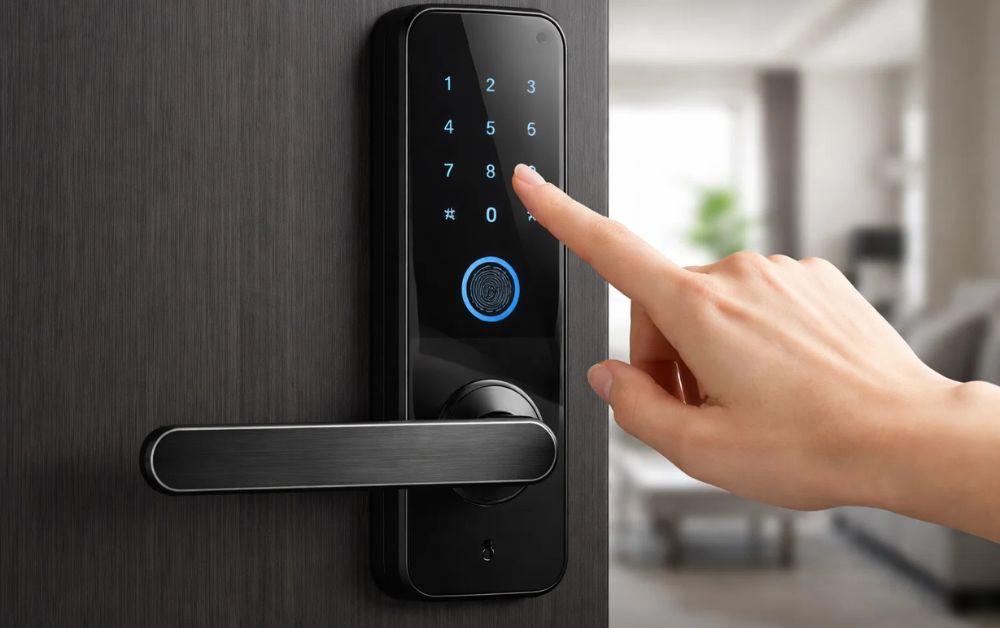
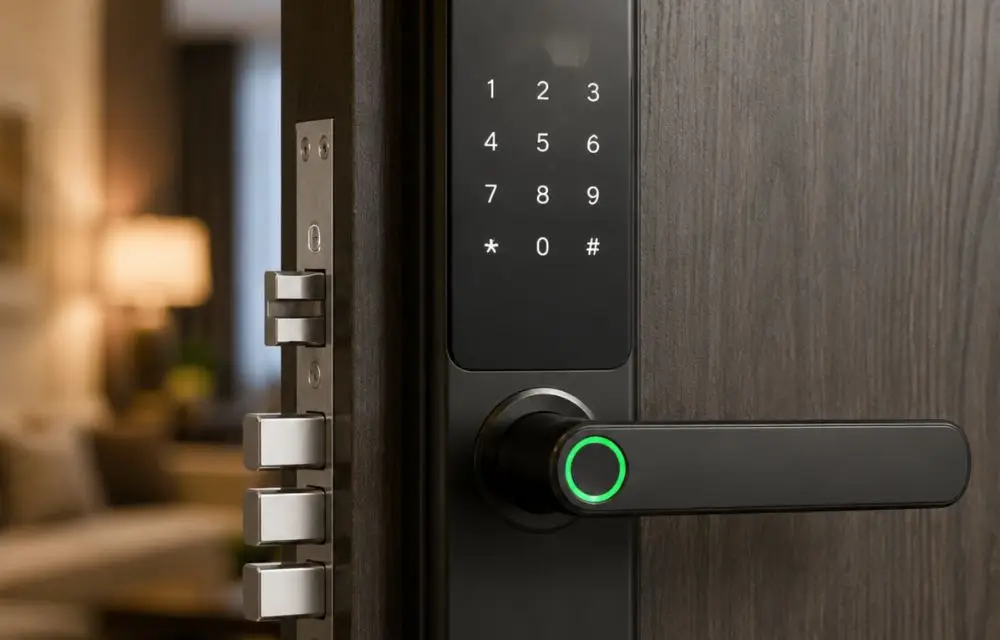
The keypad smart lock is one of the most widely adopted types, replacing the physical key with a PIN code that is entered on a numeric or alphanumeric keypad. The advantages of keypad locks include the elimination of lost or copied physical keys, the ability to set multiple different PIN codes for different users, and the option to program temporary codes for service providers or visitors that can be deleted when no longer needed.
Most modern keypad smart door lock models are also backlit for nighttime use, weather-sealed for exterior door applications, and designed with tamper alarms that activate if the lock is subjected to forced entry attempts. Some models feature scrambled keypad displays that change the position of numbers with each use to prevent observation of the PIN sequence.
Fingerprint Biometric Locks
Fingerprint smart locks use biometric sensor technology to recognize the registered fingerprints of authorised users and grant access without any code, card, or phone. The appeal of fingerprint locks is that they offer a credential that cannot be shared, guessed, or stolen — your fingerprint is uniquely yours. Access is also immediate — a fingerprint scan takes typically less than a second, providing very convenient and fast entry.
Fingerprint smart door lock models store multiple fingerprints, allowing a household or business to register all authorised users. Most also include a backup access method — typically a PIN code or mechanical key override — for situations where the sensor is not functioning correctly or where a new user needs temporary access.
Bluetooth and Smartphone-Controlled Locks
Bluetooth-enabled smart locks connect to the user’s smartphone and unlock automatically when the authorised phone is detected nearby — a feature often called auto-unlock. They can also be unlocked by tapping a button in the associated smartphone app. This hands-free or app-controlled entry is particularly convenient for situations where hands are full with shopping, bags, or equipment.
The management capabilities of Bluetooth smart door lock systems are significant — administrators can grant or revoke digital access keys remotely without needing to visit the property or hand over a physical key. Access histories are logged, showing when the door was unlocked and by whom. Temporary access can be granted with time-limited digital keys.
Wi-Fi Connected Smart Locks
Wi-Fi enabled smart locks go a step further than Bluetooth models by connecting directly to the home or building’s Wi-Fi network, which enables remote control and monitoring from anywhere in the world via an internet connection. A user can check whether the door is locked, lock it remotely if they forgot, and grant access to a visitor even when they are not physically present.
Wi-Fi smart door lock models also integrate with smart home systems and voice assistants, enabling commands like “lock all doors” as part of a leaving-home routine. Integration with smart security cameras, alarm systems, and access management platforms creates a comprehensive, interconnected security environment.
RFID and Card-Based Locks
RFID (Radio Frequency Identification) smart locks grant access using proximity cards, key fobs, or wristbands that contain an embedded chip. When the card or fob is held near the reader, the lock recognizes the credential and releases. This technology is widely used in hotels (room key cards), offices (access control fobs), and multi-residential buildings.
RFID-based smart door lock systems are particularly suitable for applications where many users need access management — the administrator can activate and deactivate individual cards remotely, set access time windows, and generate access reports.
Multi-Method Smart Locks
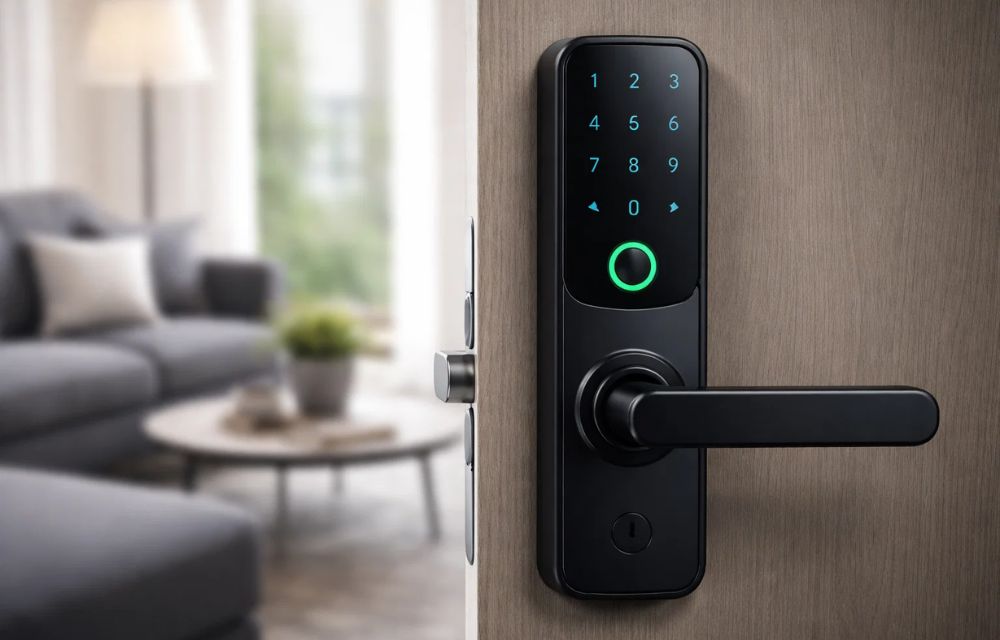
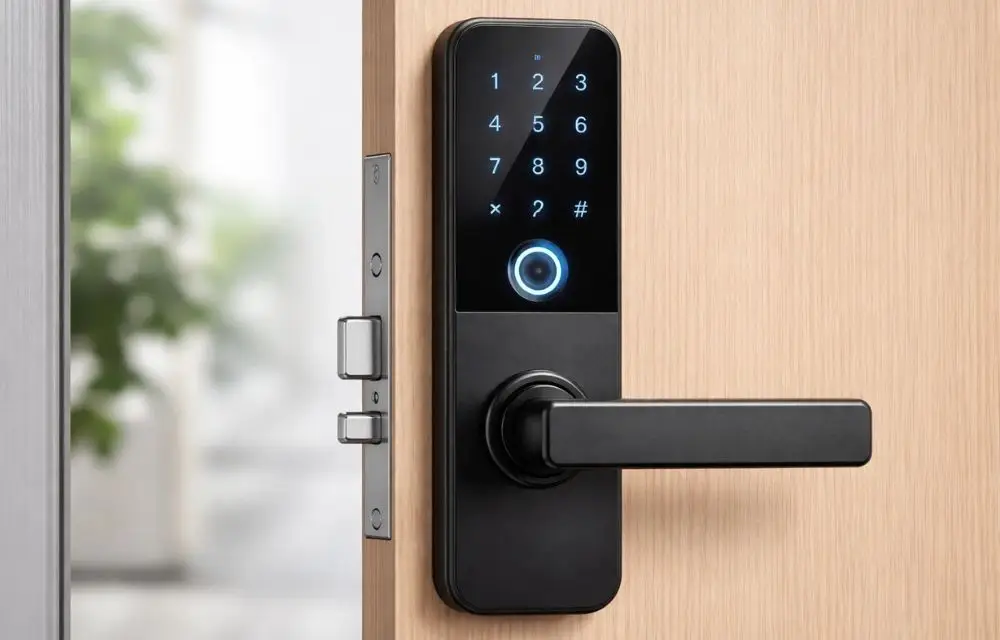
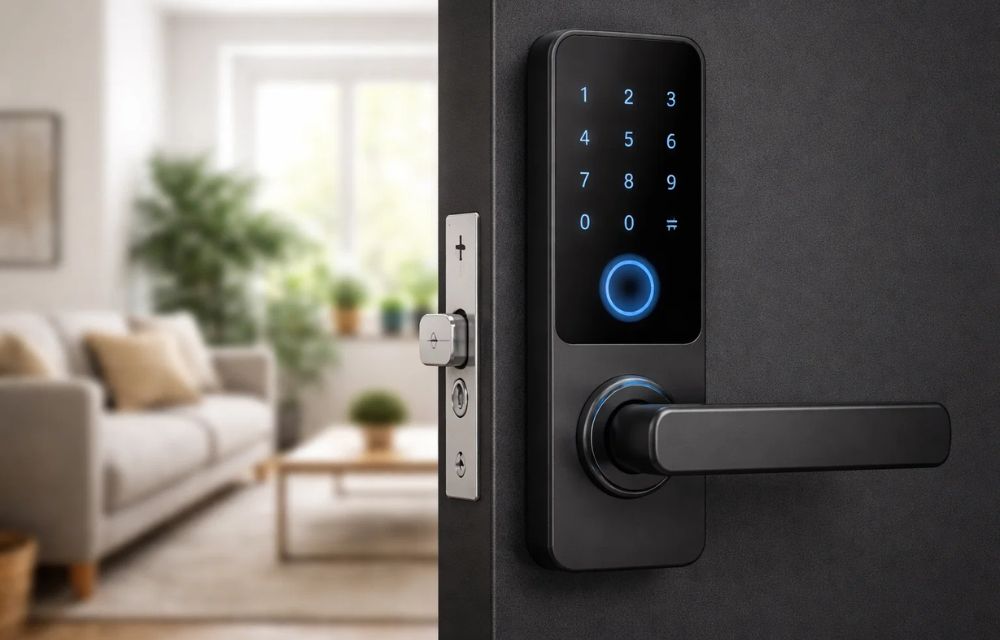
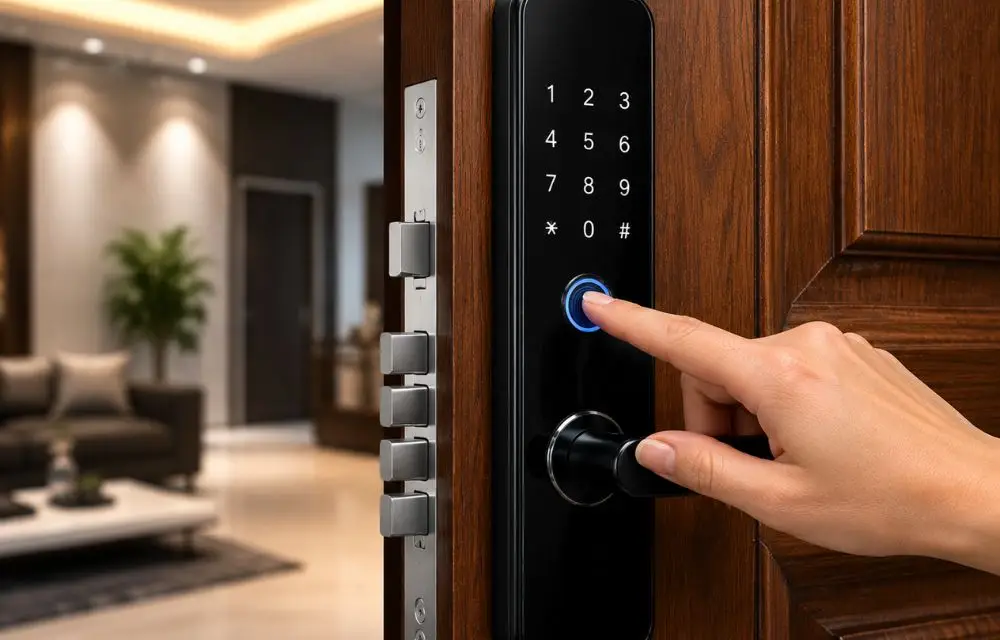
The most versatile and security-conscious smart door lock models combine multiple access methods — fingerprint, PIN code, RFID card, smartphone app, and mechanical key override — in a single device. This multi-method approach ensures that there is always a reliable backup if one access method is unavailable, while providing the convenience and management capabilities of digital access for everyday use.
Conclusion
Smart door lock technology offers a significant upgrade over traditional mechanical locking in terms of security management, convenience, and access control capability. Whether you are securing a private residence, a commercial office, a retail premises, or a managed property portfolio in the UAE, there is a smart door lock type suited to your specific requirements. Understanding the different types available — keypad, fingerprint, Bluetooth, Wi-Fi, RFID, and multi-method — is the foundation for making the right choice. Working with a knowledgeable supplier who can advise on the most appropriate technology for your application ensures you invest in a smart lock solution that genuinely delivers on its security and convenience promises.