

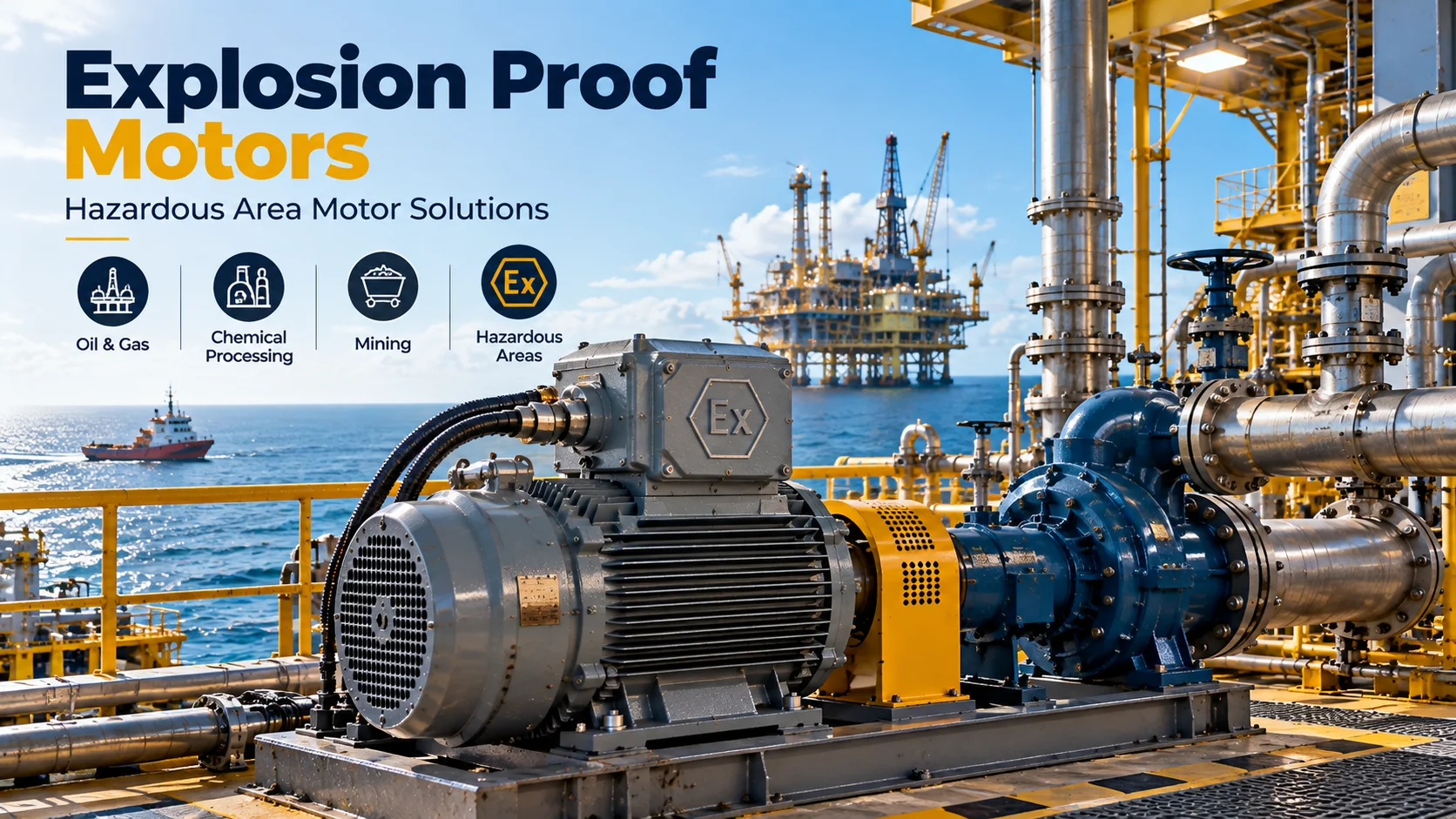

Motors drive almost everything in an industrial facility — pumps, fans, compressors, conveyors, and mixers all rely on them to keep operations moving. In a plant that handles flammable gases, vapours, or combustible dust, a standard motor is not an option, because the sparks and heat a normal motor produces during everyday operation can ignite the surrounding atmosphere. This is exactly the risk that explosion proof motors are built to manage. Specifying the right one takes more than checking a horsepower rating on a datasheet. This guide walks through what actually separates a genuinely reliable explosion proof motor from one that only looks the part on paper.

What Makes a Motor Explosion Proof
An explosion proof motor is not designed to keep an explosive atmosphere out of its housing. Instead, it is built so that if that atmosphere does get inside and is ignited by a spark from the windings or bearings, the resulting explosion stays contained within the motor casing rather than spreading outward. The casing is also engineered so its external surface never gets hot enough to ignite the gases or dust around it, even under a fault condition. This combination of containment and thermal control is what separates an explosion proof motor from a standard industrial motor with a tougher-looking shell.
Certification and Zone Matching
Every explosion proof motor installed in a UAE facility should carry valid ATEX or IECEx certification from an accredited testing body. That certificate needs to state the exact zone classification, gas group, and temperature class the motor is rated for, and this must line up precisely with the classification of the area where it will actually run. Buyers should always ask for the certificate itself, not a general claim of compliance, and check that it covers the specific motor model and frame size being ordered rather than a broader product family.
Enclosure Type and Build Quality
Most explosion proof motors use a flameproof enclosure, built from cast iron or cast aluminium with tight, precisely machined joints known as flamepaths. These flamepaths cool any escaping gases below their ignition temperature before they reach open air, and even small deviations from the certified tolerances can compromise that protection. It is worth asking a supplier how their motors are tested after manufacturing, not just during initial certification, since consistent quality control at the factory is what keeps every unit performing the way the certificate promises.
Sizing and Duty Cycle
Getting the horsepower and frame size right matters just as much for an explosion proof motor as it does for a standard one — an undersized motor overheats and shortens its own service life, while an oversized one wastes energy and adds unnecessary cost. It helps to think through the actual duty cycle of the application:
- Continuous duty applications such as pumps and fans need a motor rated for sustained running without derating.
- Intermittent duty loads like some conveyor sections can often use a smaller frame if the on/off cycle is well understood.
- High-torque starts, common with mixers and crushers, need a motor and starter combination sized for repeated inrush current without nuisance tripping.
Cooling and Ambient Conditions
Hazardous area motors already run inside a sealed enclosure, which makes heat dissipation harder than it is for an open, ventilated design. In the UAE’s climate, high ambient temperatures add another layer of difficulty, since a motor that performs well in a mild environment can run hotter than expected once installed outdoors or in a poorly ventilated plant room. Checking a motor’s rated ambient temperature range, and confirming it comfortably covers the site’s real conditions rather than just the average, avoids a motor that trips on thermal protection during the hottest months.
Maintenance and Long-Term Reliability
A correctly specified explosion proof motor still needs a sensible maintenance routine to stay reliable. Bearing lubrication schedules, vibration monitoring, and periodic insulation resistance testing all help catch early signs of wear before they become a failure. Any repair or rewind work must be carried out by a workshop qualified to preserve the motor’s hazardous area certification, since an uncertified repair can quietly void the very protection, the motor was bought for, even if it still runs afterward.
Related blog post – Common Failures in Explosion-Proof Motors and How to Avoid Them
Working With the Right Supplier
Because explosion proof motors sit at the intersection of mechanical engineering and hazardous area safety, the supplier relationship matters as much as the product itself. A good supplier will ask about the specific gases or dust present on site, the zone classification, and the duty cycle before recommending a model, rather than pointing to a catalogue and letting the buyer guess. They should also be able to support commissioning and, later, certified repairs, so the motor stays compliant for its entire working life rather than only at the point of purchase.

Conclusion
Choosing explosion proof motors correctly protects people, equipment, and production uptime, and it deserves more scrutiny than comparing prices on a spec sheet. Verified certification, correct zone matching, sensible sizing for the real duty cycle, and a clear plan for long-term maintenance together determine whether a motor performs reliably for years or becomes a recurring problem. Working with a supplier who understands hazardous area classification and can support the full lifecycle of the motor is the most dependable way to get this decision right.


